
I pulled my own Florida homeowners policy and read the roof endorsement. My house in Bradenton has a concrete tile roof from 2012. If wind or hail damages it, the policy pays 72 percent of the repair or replacement. Next year it pays 70. The carrier calls it a roof payment schedule, and it is how roof age gets into your claim even when Florida law says a carrier can't drop you over age alone.
This week the Insurance Institute for Business and Home Safety (IBHS) put another age limit on roofs, so I went back through how we got here.
What the form in my policy says
It is a two page endorsement near the back of the policy. It only covers wind and hail damage to the roof. Everything else on the house still pays at replacement cost.
For tile, the policy pays 100 percent until the roof is five years old. Then it pays 95, and the number slips about a point a year until year ten. At ten it drops to 80. After that it loses two points a year. That is 72 at 14, 70 at 15, 60 at 20, and 40 at 30 years and older.
A shingle roof on the same form does worse. It pays 80 percent at five years, 60 at ten, 40 at fifteen, and a flat 25 from year 19 on. Metal holds up best after year ten.
The percentage covers everything on the roof, not just the tile: the underlayment, flashing, vents and drip edges, plus the labor, overhead, profit and taxes. It doesn't look at condition. A 14-year-old roof that was just inspected and a 14-year-old roof with a leak both pay 72. The only inputs are the material and the installation date on the declarations page. If I replace the roof I have to tell the carrier within 90 days, or the old age keeps applying.
For every $100,000 it costs to replace my roof, the policy pays at most $72,000 and I pay the other $28,000. My wind and hail deductible is 2 percent of the dwelling limit on top of that. The form doesn't say whether the deductible comes off before or after the percentage, so I would call the carrier before counting on either number. The endorsement is listed as included, with no separate charge.
How roof age got in there
Florida already has a rule on roof age. Since 2022 an insurer can't refuse to write or renew a homeowners policy just because the roof is under 15 years old. At 15 or older the owner can get an inspection at their own cost, and if the inspector finds five or more years of useful life left, the carrier still can't refuse over age alone. That is section 627.7011.
That stops the carrier from refusing the roof. It doesn't stop the carrier from pricing the roof or paying less on it. The president of Security First told Insurance Journal that roof age and condition is the single largest rate factor in their pricing. A payment schedule does the same thing at claim time instead of at renewal.
The carriers had already been working on roofs. American Integrity filed a roof endorsement in 2019. In 2023 the state approved similar ones from Florida Peninsula and Slide that cut out wear and tear on the roof unless a named storm caused the loss. Insurance Journal noted they showed up right after the Legislature cut back assignment of benefits, roof replacement rules and one-way attorney fees. The statute also lets a carrier pay actual cash value first on a dwelling loss and hold the roof at cash value until you show you paid the roof deductible.
I haven't found the filing where my carrier's schedule was approved. The statute doesn't set any percentages. They are whatever the carrier files and the state approves.
What IBHS did
IBHS is the research group funded by the property and casualty insurance industry. It runs the Fortified program, the building standard for homes meant to hold up in hurricane winds. More than 100,000 homes carry the designation.
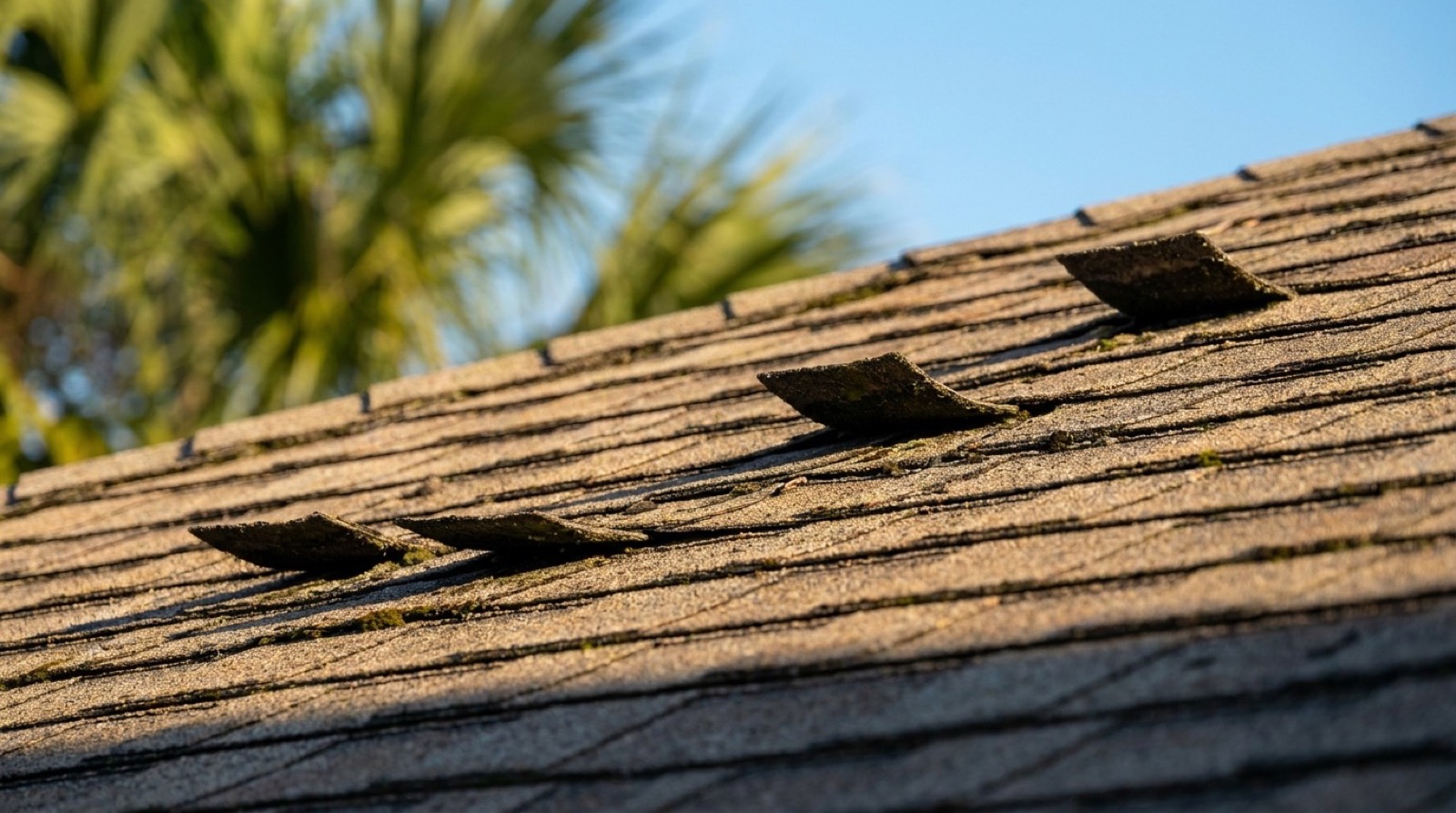
On September 22 it released a 10-year study from its roof test sites in South Carolina, Wisconsin and Ohio. Most shingles gain some wind resistance in their first few years and then start losing it between years five and ten. How fast depends on the product. Shingles coming unsealed was the biggest cause of wind failure.
A bulletin followed on September 29. As Roofing Contractor reported it, starting January 1, 2027 a home with a shingle roof can keep a Fortified designation for 15 years at most, counted from the designation date or from the documented installation date. A roof with no known installation date gets one term of up to five years and can't be re-designated until the shingles are replaced. Homes designated before 2027 keep their current expiration dates.
IBHS says this is not a finding that a shingle roof has to be replaced at 15 years. It only decides who can hold the Fortified designation.
The shingle manufacturers' association, ARMA, says the study is flawed. It says IBHS used its own test methods instead of the ASTM standards, that the lab has no independent audit, and that by its count a third of the specimens held or improved their wind resistance. It wants insurers to stay away from age caps. I haven't read the full IBHS report or ARMA's full brief, only what each side published about them.
Both sides are paid by somebody. ARMA represents the companies that sell shingles. IBHS is funded by the insurers who price the risk.
My opinion
Age is easy to measure and condition is hard, so age is what ends up in the rules. The Fortified clock, the rate factor and the table in my policy all work that way. Every one of them shifts more of the cost of an older roof from the carrier to the homeowner, and none of them asks whether the roof is actually good. I don't blame a carrier for wanting a simple number. But a 14-year-old tile roof in good shape pays the same as one that is falling apart, and that is hard to call fair.
I found nothing showing a Florida carrier adopting a Fortified-style 15-year cap. Nobody should count on that staying true.
What I would do
- Find the roof endorsement on your declarations page. Look for the words roof surfacing, roof surfaces or payment schedule. If it's there, get the form and find your roof material and age on the table.
- Check the roof year the carrier has on file. The whole schedule is built from it.
- If you put on a new roof, report it. Mine gives 90 days.
- Keep the permit and the roofer's final invoice. That is your proof of the date for the schedule, the Florida inspection rule and Fortified.
- At 15 years, get the inspection before the renewal notice. A report showing five or more years left is what protects the policy under Florida law.
- If you are thinking about replacing, ask what a new roof does to the schedule first. At a low percentage, replacing early can cost less than waiting.
If you want me to look at yours, send me the declarations page and the roof endorsement and I will tell you what a claim pays today and next year. We write homeowners insurance up and down the Gulf Coast, and I covered the inspection rule in more detail in the 16-year-old roof.
This is general information and my own opinion, not legal advice or a quote. Coverage and pricing depend on the carrier and the underwriting. The policy details above come from my own homeowners policy.
Sources
- Dennis Hendrickson, own homeowners policy declarations and endorsement SPE HO3 RSE 09 21, effective October 13, 2026 (carrier and policy number withheld).
- Florida Legislature, Florida Statutes 627.7011, 2026 edition, subsections (3) and (5).
- William Rabb, Florida OIR Approves Roof Endorsements That Could Bar Non-Storm Claims, Insurance Journal, June 8, 2023.
- William Rabb, Manufacturers Hammer IBHS Over 15-Year Roof Age Limit for Fortified Designation, Insurance Journal, November 9, 2026.
- IBHS, IBHS Research Reveals Critical Links in Asphalt Shingle Wind Performance After 10 Years of Aging, news release, September 22, 2026.
- Tanja Kern, IBHS Sets 15-Year FORTIFIED Limit for Shingle Roofs, Roofing Contractor, October 13, 2026 (details of bulletin FH-2026-03, read through this coverage and not the bulletin itself).
- FORTIFIED, Technical documents, bulletin FH-2026-03, listing.
- Asphalt Roofing Manufacturers Association, ARMA Responds to Recent IBHS Report, 2026.
Get a quote on this coverage.
Ten minutes on the application. Dennis reads it himself and responds the same business day in most cases.
Start the application →Hendrickson Insurance, (941) 957-2796, [email protected], FL License E095547.
Coverage descriptions are general. Actual coverage is governed by the terms, conditions, and exclusions of the issued policy. Availability varies by carrier and by state.
