
If you own a Florida home and your wind mitigation report says it was completed in 2022 or 2023, it was written on a form that no longer exists. The Florida Office of Insurance Regulation updated the Uniform Mitigation Verification Inspection Form, OIR-B1-1802, effective April 1, 2026. The prior revision was dated January 2012. The new one runs six pages instead of four.
The form is the document your insurer uses to decide what windstorm credits your house earns. It is also valid for up to five years, so a report that was fine at your last renewal can be sitting in a file on a form the state has since replaced. This is what changed, from the form itself.
Why the form changed
Section 627.0629 of the Florida Statutes requires the Office of Insurance Regulation to review and update the fixtures and construction techniques that reduce windstorm damage by January 1, 2025, and every five years after that. In June 2024, Applied Research Associates completed a Residential Wind-Loss Mitigation Study for the office. The office says that study is the reason the form was updated.
The same office page says the three companion forms are still under evaluation. The form that shows the range of windstorm premium credits for single family homes, OIR-B1-1699, is listed as effective October 2006 with updates pending. That matters in a practical way. The inspection form tells the insurer what your house has. What each feature is worth on your premium is set in that insurer's own rate filing and varies by company. I am not going to quote a dollar value for a feature, because none is published on the form.
What the nine questions ask now
The 2012 form had seven questions. The 2026 form has nine.
1. Building code. Which version of the Florida Building Code was in force when the original permit application was filed: the 2001 and 2004 code, or the 2007 code and later. Homes built in 2007 or 2008 need a permit application dated after December 8, 2006 to prove which code applied.
2. Region. New. The inspector marks the home's design wind speed region: the High-Velocity Hurricane Zone in Miami-Dade and Broward, Region 1 at 140 mph or more, Region 2 at 130 to 139 mph, or Region 3 below 130 mph.
3. Roof slope. New. Is the main roof at 6:12 or steeper, or flatter than that.
4. Roof covering. The same idea as before, with one added line: synthetic or composite tile now has its own box. Each covering needs a permit application date or a Florida or Miami-Dade product approval number, plus the year it was installed.
5. Roof deck attachment. How the sheathing is fastened to the trusses, graded from the weakest form of attachment. The options now include spray foam rated at an uplift resistance of 110 psf.
6. Roof to wall attachment. The form grades the weakest connection on the house, not the average, from toenails up through the metal connector types. It also now has a box for connections that were not installed as intended.
7. Roof geometry. Hip roof, flat roof on a building of five or more units, or other.
8. Sealed roof deck, also called secondary water resistance. The form lists what counts, and it states that standard underlayment or hot-mopped felts do not qualify on their own.
9. Opening protection. The weakest form of wind-borne debris protection on the house, across every window, door, sliding glass door, skylight and garage door. The form says buildings with openings that need replacement do not qualify for wind mitigation rate differentials, whatever else the house has.
What can go wrong on a high-value home
The form grades the weakest element, and a large house has a lot of elements. One older sliding door, one garage door without a verified rating, or one roof section with a different deck fastening pattern can set the answer for the whole structure. On a 2 or 3 million dollar house with an addition or a lanai, the odds that every opening and every roof section matches are lower than on a tract home. If the inspector cannot verify an item, it is marked unknown, and an unknown is not a verified feature.
The documentation rule is also stricter than most owners expect. The form states that at least one photograph or document providing proof must accompany it for each attribute marked in questions 2 through 9. A FORTIFIED Home certificate at the Roof, Silver or Gold level can be used to validate the attributes in questions 4 through 6 and 8 through 9. The form itself says some items listed may not qualify for a discount. Checking a box is not the same as earning a credit.
Who is allowed to sign it
Section 627.711(2)(a) lists the people whose signed forms an insurer must accept: licensed home inspectors who completed the required hurricane mitigation training and exam, certified building code inspectors, licensed general, building or residential contractors, licensed professional engineers, and licensed professional architects. The statute requires the authorized person to inspect the structures personally, with a narrow allowance for engineers and contractors to send a direct employee. The Office of Insurance Regulation advises confirming your inspector is authorized under that section.
The statute also makes it a first degree misdemeanor to knowingly provide a false mitigation form to get a discount you did not earn. A report that says what the inspector hopes you will want to hear is a liability for you, not an asset.
What to check before renewal
Find the date on your current report. If it is on the Rev. 01/12 form, ask your agent whether your carrier still accepts it at renewal or wants the new one. Carriers set their own transition rules, and I would not assume.
Read the unknowns. Any question answered unknown, no attic access, or other is a credit you are not getting. Some of those can be fixed with documents: a permit record, a product approval number, an installation date.
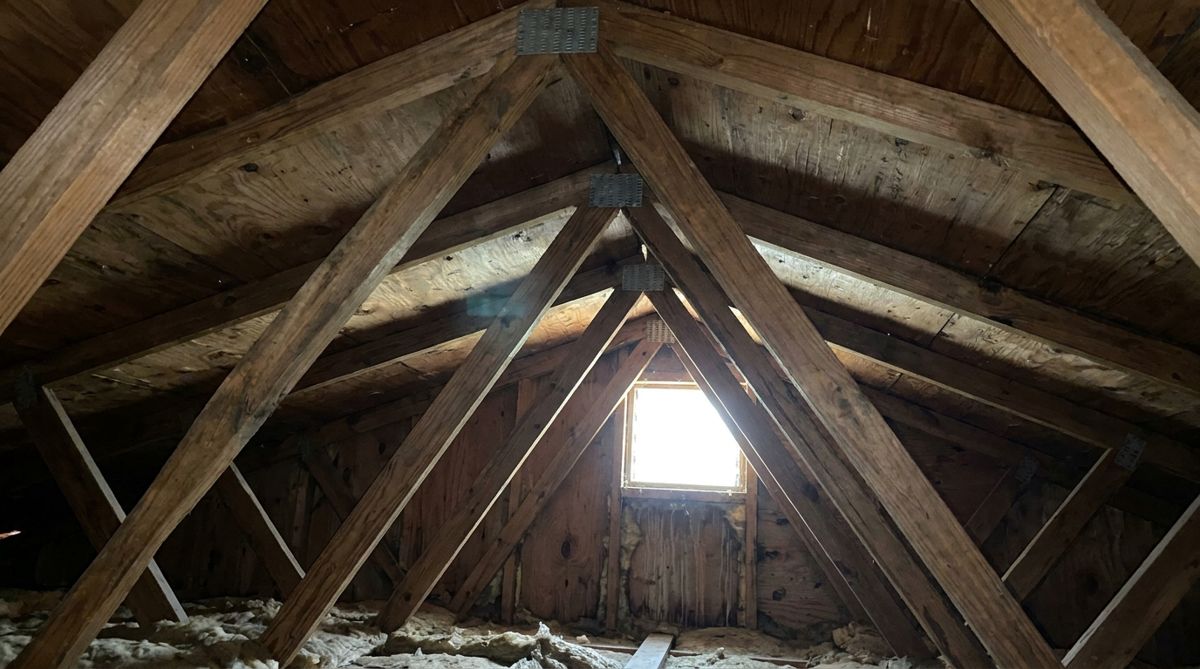
Ask about the sealed roof deck and the roof to wall connection first. Those two sit under the roof covering and in the attic, so they are the hardest for an inspector to confirm without records or photographs. If a roof is being replaced, photograph the deck and the connectors before the covering goes on.
Match the report to the house. The form is only valid while no material changes have been made to the structure, so an addition or a new roof means a new inspection.
Look at what the insurer publishes. Since October 1, 2023, Section 627.0629 requires each insurer to describe its hurricane mitigation discounts on its website.
The high-value home insurance page covers how private-client carriers look at a roof and its openings, and the homeowners page covers the policy itself.
The point
The wind mitigation form is the one document where the state tells you exactly what the insurer will look at on your roof and your openings. It was rewritten this year, and a report on the old form may be leaving credits uncollected. Read the new questions, fix the unknowns, and have the report redone by an inspector the statute allows.
Sources
- Florida OIR, Wind Mitigation Resources: updated OIR-B1-1802 effective April 1, 2026; prior revision January 2012; June 2024 ARA study; OIR-B1-1699 effective October 2006, updates pending; valid up to five years absent material changes or inaccuracies.
- Uniform Mitigation Verification Inspection Form OIR-B1-1802 (Rev. 04/26): the nine questions, documentation requirement, FORTIFIED certificate language, 2026 text.
- Uniform Mitigation Verification Inspection Form OIR-B1-1802 (Rev. 01/12): prior seven questions, 2012 text.
- Florida Statutes, section 627.0629, 2026 text: rate filing credits, review by January 1, 2025 and every five years, insurer website disclosure since October 1, 2023.
- Florida Statutes, section 627.711, 2026 text: authorized inspectors, personal inspection, misdemeanor for a knowingly false form.
- Florida OIR news release, May 27, 2025: advice to confirm the inspector is authorized under section 627.711(2)(a).
Get a quote on this coverage.
Ten minutes on the application. Dennis reads it himself and responds the same business day in most cases.
Start the application →Hendrickson Insurance, (941) 957-2796, [email protected], FL License E095547.
Coverage descriptions are general. Actual coverage is governed by the terms, conditions, and exclusions of the issued policy. Availability varies by carrier and by state.
