
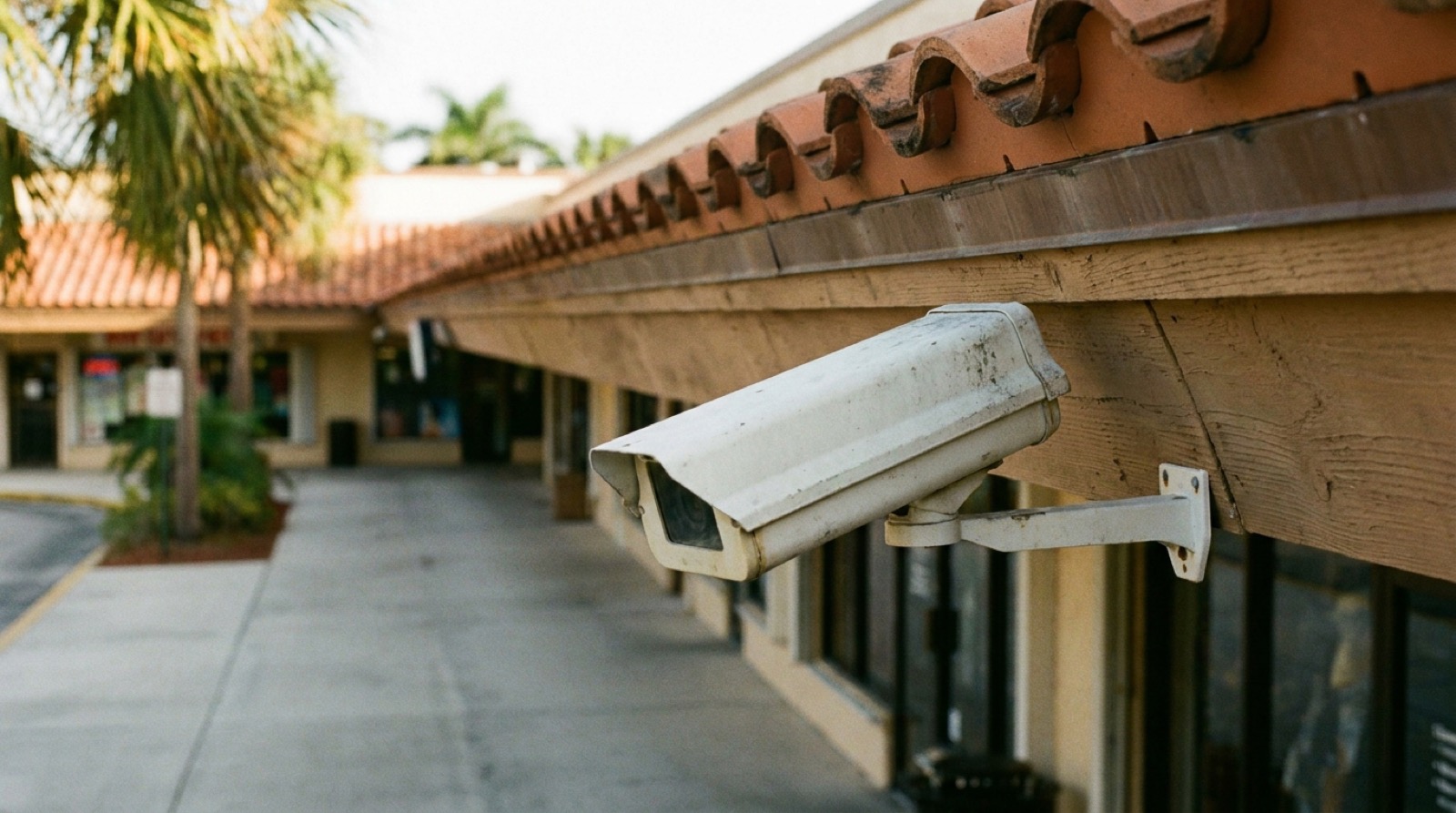
A commercial property owner in the Sarasota area received a certified pre-suit demand letter from a large personal-injury law firm. The letter said a visitor fell because of an unmarked sidewalk or curb hazard at the property. The property had working security cameras. The video showed the person lost their balance and went down on their own, with no contact with any hazard and no defect involved.
The owner's liability carrier denied the claim based on the video. After the plaintiff's attorney was shown the video, their position changed and the claim did not move forward. Without that video, I believe this is almost certainly a payout for something that never happened.
This is not rare, and I think it is getting worse
From where I sit, demand letters against Florida property owners are going out more than ever. A pre-suit demand costs the person sending it very little. Defending even a thin claim costs the owner and the carrier real money. So carriers sometimes pay a nuisance-value settlement just to make a weak claim go away. In my opinion, that payout is exactly what funds the volume.
The model is simple, and it is my opinion, not a statement about any one case: advertise heavily, take in a large number of claims, and settle the ones that pay. Morgan & Morgan is the best-known example of a firm built at that scale. Its founder's podcast bio describes more than 1,000 attorneys, 6,000 employees, all 50 states, and over $2 billion in annual revenue. I am not saying any firm files claims it knows are false. I am saying a business built on volume has a reason to send a lot of letters.
Two public facts worth knowing about that kind of volume
The court record. In February 2025, a federal judge in Wyoming sanctioned three lawyers in Wadsworth v. Walmart after a filing cited cases that did not exist. Eight of the nine case citations in the motion were fabricated by an AI tool. Rudwin Ayala, the Morgan & Morgan attorney who drafted it, was fined $3,000 and lost his permission to appear in the case. T. Michael Morgan and local counsel Taly Goody were fined $1,000 each for signing it without checking. The judge wrote that blind reliance on another attorney can violate Rule 11. By LawFuel's account, the firm withdrew the motion within a day, reimbursed opposing counsel's fees, added training, and was not itself sanctioned. See also Law360. I draw no conclusion about any other filing. I include it because it is a public record of what can happen when volume meets shortcuts.
The camera policy, in his own words. John Morgan, the firm's founder, has said on two podcasts that remote employees must accept a camera on their work computers. On The Iced Coffee Hour on August 27, 2026, and earlier on Success Story with Scott D. Clary in July, he described monitoring keystrokes and a productivity score. On the Iced Coffee Hour he said 23 people quit the first week. His words, as Orlando Weekly and the Daily Caller reported them:
"We're going to put a camera on your computer. We're going to put a camera up your ass."
Whatever you think of that policy, notice what it assumes: that a camera settles what a person actually did. I agree with that part. In my opinion, if video is good enough to hold his remote staff accountable, it is good enough to protect your parking lot and your walkways.
Why the camera saved this owner
A claim with no video is a swearing contest. The person who looks hurt usually wins that with a jury. Objective video turns "their word against yours" into a fact. I covered the basics in Cameras on the Premises: The Cheapest Liability Defense a Florida Property Owner Can Buy. The short version:
- Cover entrances, ramps, walkways, parking, and common areas.
- Keep the cameras working. Check them on a schedule, not after a claim.
- Save the clip the day an incident happens, and keep it. Letters can arrive weeks or months later, and Florida's window to sue on a negligence claim is now two years.
- Post camera signage. It discourages claims before they start.
Cameras are step one, not the whole plan
Video wins the cases where there is video. Build the rest of the file too:
- Written incident reports, completed the same day.
- Inspection and maintenance logs that show you looked and fixed things.
- Dated photos of walkways, curbs, and parking surfaces.
- Warning signage where a hazard is known.
- A lease that requires every tenant to carry liability insurance and name you as additional insured.
This is why you carry insurance
General liability and umbrella coverage can pay your defense costs even when the claim is false. That is what you are buying. Without coverage, you pay your own attorney to beat a claim that never should have been made, and you pay any nuisance settlement yourself. Check how your policy handles defense: some pay it on top of the limit, some take it out of the limit. In my view, lessor's-risk owners and plaza owners are prime targets, because the owner holds the property and the policy. See our general liability, commercial umbrella, and strip center pages.
The system still rewards this, and that needs to change
Florida's 2023 reform, HB 837, took effect March 24, 2023. It cut the time to file a negligence suit to two years. It barred recovery by a plaintiff found more than 50 percent at fault for their own harm. It also changed how attorney fees are set. Those changes helped.
Reform moves numbers when it targets the incentive. In homeowners insurance, the Office of Insurance Regulation reports Florida's share of the nation's homeowners lawsuits fell from more than 79 percent in 2020 to 41 percent in 2025, as Insurance Journal reported. I have not seen the same relief in premises liability, and the letters keep coming.
That is my view, and it is why I think property owners and voters should push for more. If you agree, contact your state legislators and tell them. Find them at the Florida Senate and Florida House.
This is a general-information opinion piece, not legal advice. Statements about the pattern of high-volume claims are the author's opinion. Insurance coverage varies by policy. The Sarasota-area example is anonymized and described only as documented. Quotations are as reported and linked above.
Send me your current policy and I will tell you what it does not cover.
Email the declarations page to dennis@hendricksonins.com or text a photo of it to 941-952-7991. No charge, no obligation, plain answer.
Email the policy →Hendrickson Insurance, (941) 952-7991, dennis@hendricksonins.com, FL License E095547.
Coverage descriptions are general. Actual coverage is governed by the terms, conditions, and exclusions of the issued policy. Availability varies by carrier and by state.
