
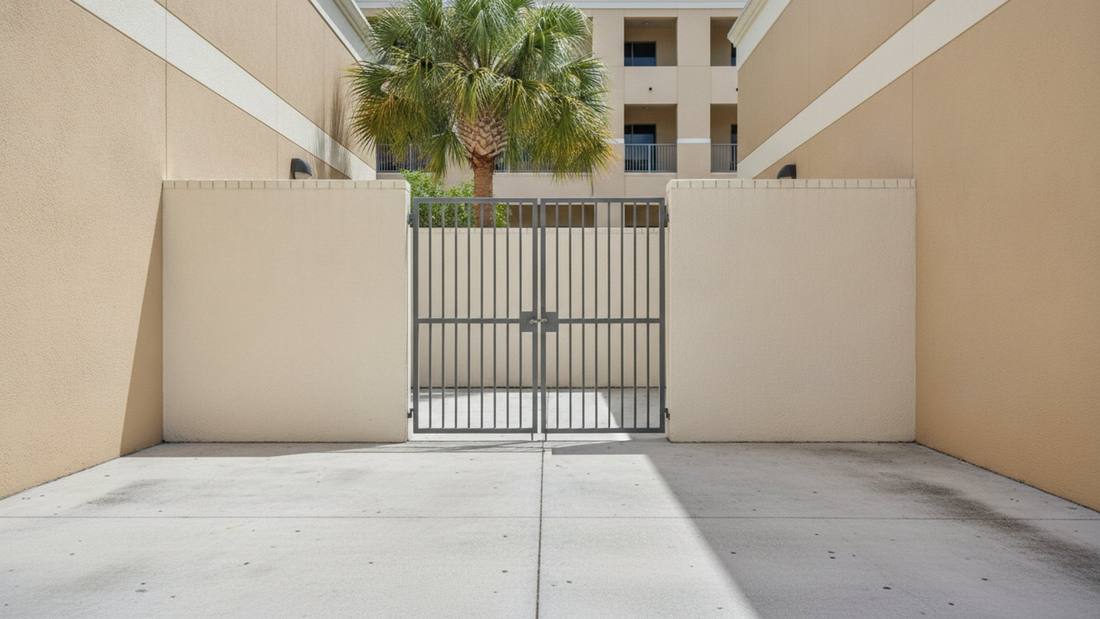
Keeping dumpster lids closed sounds like basic housekeeping, not a compliance issue. On a Florida strip center, it is both. Birds and pests get into an open dumpster fast, and once trash starts scattering across the parking lot, it stops being a maintenance embarrassment and becomes something a neighbor, a code enforcement officer, or a health inspector can act on. For an owner buying strip center insurance in Florida, that gap between mess and violation matters more than it looks.
There Is No Single Florida Rule, There Are City Rules
Unlike backflow prevention or fire sprinkler inspection, which flow from statewide code, dumpster enclosure requirements in Florida are set municipality by municipality. There is no single statewide dumpster ordinance a strip center owner can look up once and apply everywhere. What is required in one Gulf Coast city may not match what is required two exits down the interstate. Hollywood, Florida shows how specific a city can get. Section 50.02 of its code says each business must provide for its own refuse collection and container unless the landlord provides for the entire property, and the same section regulates dumpsters and dumpster enclosures with a stated purpose of reducing overflowing garbage. The enclosure standards themselves (pad, height, gate) are written into that section, and the next city over may write them differently. The specific trigger is local. Before assuming a property is compliant because it looks like the plaza down the road, check the specific city or county ordinance that applies to it.
Food-Service Tenants Add a Second Layer
If a plaza has a restaurant, a cafe, or any food-service tenant, dumpster compliance is not the only waste rule. Many counties run a grease program on top of the city code. Pinellas County, for example, requires food service establishments to hold a permit, to have their grease interceptor pumped at least every 30 days unless the county approves a variance, to use a hauler permitted by the county, and to keep cleaning and service records on site for three years. That is the county utility setting pump-out frequency and enforcing it, separate from whatever the city requires for the dumpster enclosure itself. A restaurant tenant that is fine on the zoning side can still be out of compliance on the grease side, and both are the kind of thing an underwriter or an adjuster asks about after an incident.
Why the Lid Matters More Than It Looks
An open or overflowing dumpster is not just unsightly. It draws birds and pests, and once trash is loose in the lot, it can end up against a storefront, in a drive aisle, or as debris a customer slips on, which folds this back into the same premises liability conversation as a faded wheel stop or a dark corner of the lot. It also gives a code enforcement officer, doing a routine pass or responding to a neighbor's complaint, a reason to look closer at the property, and that closer look does not always stop at the dumpster. Keeping lids closed and enclosures maintained is a small, cheap habit that keeps a housekeeping issue from turning into a code case or, worse, evidence in a slip-and-fall claim.
The Insurance Angle
A code enforcement file is not something most owners think to mention to their insurance agent, but it should be. An open code case, even one as small as an unenclosed dumpster, is a record that exists whether or not you bring it up, and it can surface during underwriting or after a claim in a way that is worse for having gone unmentioned. A property with a clean code enforcement history and documented waste management practices, enclosure maintained, gates working, grease records current for food tenants, is a straightforward file for an underwriter. A property with open violations or a pattern of complaints is a harder one, and that difficulty shows up in either the quote or the questions asked at renewal.
The same logic applies if a slip-and-fall claim ever traces back to scattered trash. An adjuster investigating that claim is going to ask when the area was last serviced, whether the enclosure was functional, and whether there is a record of anyone addressing it. Owners who can produce that record are in a materially different position than owners who cannot.
What to Do
- Confirm the specific city or county dumpster enclosure ordinance that applies, do not assume it matches a nearby property
- Keep lids closed and enclosure gates functional, it is the cheapest line of defense against a code complaint
- For food-service tenants, confirm grease interceptor maintenance and pump-out records are current with the county or utility that runs the grease program
- Keep enclosure permits and any correspondence with code enforcement on file
- Walk the service area as part of the same routine that covers lighting and striping, not as an afterthought
A scattered lot creates the same kind of hazard covered in the piece on wheel stops, curb paint, and trip claims. For the full coverage picture, start with the Florida strip mall insurance guide.
Sources
- City of Hollywood, Florida Code of Ordinances, Chapter 50, Section 50.02 (Solid Waste and Recycling Management), current code
- Pinellas County Utilities, Commercial Grease Management program, current program page
Case summaries are plain-language readings of the published opinions, not legal advice. Ask a Florida attorney how a case applies to a specific property.
